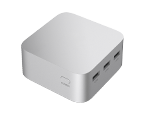
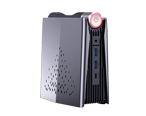
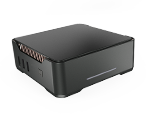
A Mini PC is a compact computer that integrates all the essential components of a traditional desktop — processor, RAM, storage, graphics, and I/O ports — into a much smaller and more portable design. These devices are usually the size of a small book or an external hard drive, yet they can deliver the performance of a full desktop computer.
Key Features of Mini PCs
Small Size & Compact Design
Fits easily on a desk or can be mounted behind a monitor.
Saves space, perfect for minimalist and modern work environments.
Low Power Consumption
Typically uses between 15–65 watts.
Much more energy-efficient compared to traditional desktops (200–600 watts).
Easy Portability
Lightweight (300g – 1.5kg).
Can be carried around easily, even in a small bag.
Silent Operation
Many models are fanless or use small, quiet cooling systems.
Ideal for quiet environments such as libraries, offices, or bedrooms.
Versatile Connectivity
USB-C / USB 3.0
HDMI / DisplayPort (supports multiple monitors)
Ethernet LAN & WiFi
Bluetooth
SD card reader
Some models even support external GPUs (eGPU) for enhanced graphics performance.
Flexible Use Cases
Mini PCs can be used for a variety of purposes:
Office and daily productivity tasks
Multimedia and 4K video playback
Home server or NAS
Smart systems and IoT
Gaming (in higher-end models with modern CPUs and GPUs)
Mini PC vs Laptop and Desktop
Compared to Laptops:
Lighter and more portable (without keyboard and screen).
Better cooling and longer lifespan.
Easier upgrades (RAM and storage).
Compared to Desktops:
Smaller and more energy-efficient.
Less noise.
However, desktops are still stronger for heavy workloads and high-end gaming.
Advantages
✅ Compact size ✅ Low power consumption ✅ Silent or very quiet operation ✅ Upgradeable (RAM & SSD) ✅ Multi-monitor support ✅ Easy portability
Disadvantages
❌ Lower performance compared to high-end desktops ❌ Limited upgrade options (internal GPU usually non-replaceable) ❌ Restricted cooling in ultra-small models